
Friday, June 28, 2013


Tuesday, June 4, 2013
Who Wants Pizza?
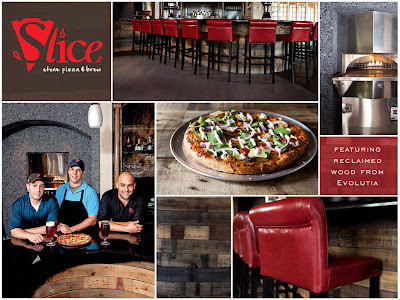 |
| Slice of Birmingham |
SLICEFEST brought together many locals this past weekend to enjoy festivities! Slice owns an inviting space along with a variety of events and drink specials during the week. This spot is definitely a place you will want to check out if you have not! Don't forget to take a peek at their beautiful bar built from reclaimed wood by Evolutia.
Be sure to stay connected to Evolutia so you can stay informed of our new products, news, contests and more!
 |
EVOLUTIA 2850 35th Ave North Birmingham, AL 35234 205.320.0940 info@evolutiamade.com www.evolutiamade.com 


 |
Monday, June 3, 2013
Evolutia Style!
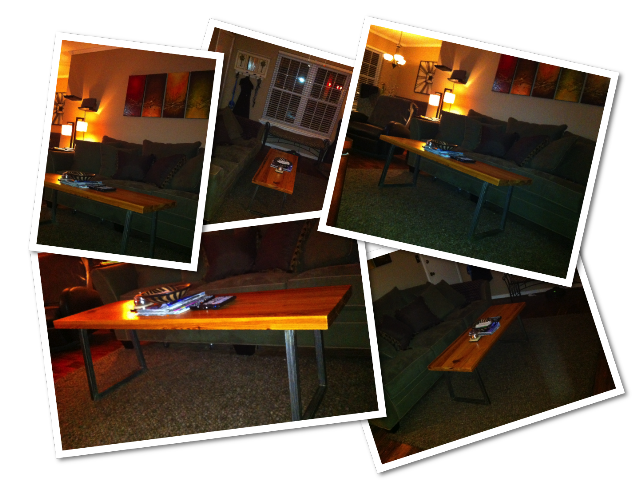 |
| Evolutia Style - Rustic and Modern Antique Heart Pine Coffee Table This modern coffee table is made up of a reclaimed antique heart pine for the tabletop that is stabilized by a sleek, metal base to create a beautiful, modern coffee table that is sure to turn heads. The style of the table allows you to create a mixture of styles when incorporating it into your home. This sustainable product is not only visually pleasing, but was created using reclaimed materials to reduce carbon footprints! Thanks to the Phillips for sharing photos of their set up with the new coffee table. It looks absolutely wonderful! Anyone interested in a custom made furnishing built from reclaimed materials, please contact Evolutia! |
Be sure to stay connected to Evolutia so you can stay informed of our new products, news, contests and more!
|
EVOLUTIA 2850 35th Ave North Birmingham, AL 35234 205.320.0940 info@evolutiamade.com www.evolutiamade.com
|
Why Choose Evolutia?
Top Five Reasons To Choose Evolutia
1. Evolutia promotes sustainability to ensure preservation of natural resources available today and to discover different avenues for a more sustainable lifestyle.
2. Evolutia owns experience collaborating and partnering with designers, architects, engineers and clients to assist you with your project.
3. Evolutia chooses to provide only the highest quality of all products and materials, ALWAYS.
4. Evolutia reclaims materials from old, abandoned mills and warehouses which are highly valued for it's historical content.
5. All materials are reclaimed and all products are proudly built from and in the USA.
Be sure to stay connected to Evolutia so you can stay informed of our new products, news, contests and more!
|
EVOLUTIA 2850 35th Ave North Birmingham, AL 35234 205.320.0940 info@evolutiamade.com www.evolutiamade.com
|
Wednesday, May 29, 2013
WINNING
Congratulations to Curt Phillips! Evolutia held a random drawing to select an owner to this beautiful antique heart pine coffee table. Sleek and modern, yet with a clean and natural touch! Perfect for any setting don't you agree? And what would better compliment the gorgeous table top than a strong, metal base which adds a bit of a minimalist flavor!
As the lucky winner, Evolutia asked for Mr. Phillips to take some photos with his new coffee table. It is obvious that Mr. Phillips was absolutely overjoyed! :)
Along with the snapshots, Evolutia asked Mr. Phillips a few questions as well...
Name: Curt Phillips
Evolutia would like to thank all those who participated in the drawing and hopes that you will continue to "Share" Evolutia with your friends and family as well as the many benefits of reclaimed materials to build a better yet more sustainable world.
As the lucky winner, Evolutia asked for Mr. Phillips to take some photos with his new coffee table. It is obvious that Mr. Phillips was absolutely overjoyed! :)
Along with the snapshots, Evolutia asked Mr. Phillips a few questions as well...
Name: Curt Phillips
Age: 30
What intrigued you about this coffee table? I really liked the modern and clean look of the table. It's made from beautiful antique looking wood, yet the construction of the table is very contemporary looking.
Favorite aspects or characteristics? The Wood! We have really pretty hard woods in our place that are on the darker side. The lighter shade of the coffee table and the beauty of the wood contrast well with our floors.
How do you feel about the idea of a more sustainable life? I think that it is very important to reuse and repurpose the resources we already have available. I think repurposing and recycling are going to become more and more important to society as we move into the future. Evolutia does an amazing job of taking items that may have lost their luster over time, repurposing or refinishing them and giving them new life.
What are your opinions on reclaimed resources vs new resources? I think it's great anytime you can take something old and turn it into something new and beautiful. You just can't find some of the beautiful wood pieces, that Evolutia uses in their furniture any more. It seems more companies mass produce furniture out of plastic, metal, and cheap featureless wood that has no character and will probably break within 5 years. Evolutia obviously takes great pride in the pieces they create and if the rest of their inventory is anything like the table we won, I would have no problem paying top dollar for their unique one of a kind furniture and consider it a wonderful investment because I know their furniture is built to stand the test of time.
If you could give your table a name, what would it be and why? I would name the table Woody, for obvious reasons.
Any extra comments: I just want to thank Evoluita for giving us this beautiful coffee table for our Condo. My wife and I feel very blessed to have won such a beautiful piece for our home and know that we will enjoy the coffee table for many years to come. Thanks again!
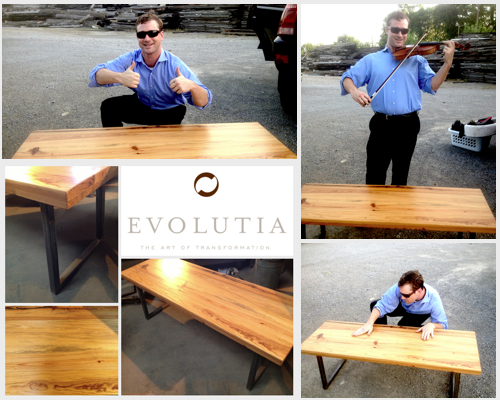 |
| Introducing Curt Phillips, Evolutia's winner of the antique heart pine coffee table! |
Be sure to stay connected to Evolutia so you can stay informed of our new products, news, contests and more!
|
EVOLUTIA 2850 35th Ave North Birmingham, AL 35234 205.320.0940 info@evolutiamade.com www.evolutiamade.com
|
Thursday, May 23, 2013
Monday, May 20, 2013
New Events for Evolutia!
Last week was quite an eventful one as we counted down to the minutes till a name was drawn to win the table by Evolutia.
We were lucky enough to record the whole thing so we could share with you the most anticipated moment.
Congratulations to Curt Phillips for winning the drawing!
We look forward to meeting you soon!
Now I know that for all you others, you are not excited to hear that someone else won and yes, I understand, trust me. This will not be the only give away Evolutia will have. There are still many more to come and many more chances to win other cool things by Evolutia! Just be sure to "Like" us on Facebook and follow us on Twitter, Instagram, Tumbler, Google+, YouTube and FourSquare to stay on top of all the latest updates and sign up to our newsletter at our Evolutia Website.
As you all know Evolutia is collaborating with Recherché Furnishings to bring you an amazing new product that will definitely be the next new rave in any interior space!

The craftsmanship executed with so much care and passion to creating some of the most unique and exquisite tables around. One of the most prominent styles of Recherché is the use of pigmented concrete to produce a beautiful, solid yet functional piece that will leave you dazzled! Some of the concrete tabletops also include different crushed objects such as glass to give the piece more colorful life for those who are interested in a more vibrant table. With so many variables allowing anyone to customize their very own table into exactly the style and vibe they may want. June brings the collaboration between Evolutia's reclaimed beauties intertwined with Recherché's exquisitely captivating creations. On June 19-25, Recherché will be showcasing their entire line and featuring our new collaborative pieces at the Dallas Market Center, Omni Sales Group, Suite 333. The Omni Sales Group owns a breathtaking 15,000 square foot award-winning showroom facing the atrium of the Dallas World Trade Center. As we draw closer, we also draw closer to getting to see the final pieces to the series of Evolutia and Recherché collaborative creations. Visit Recherché Furnishings!
Elmore house given a second life...
One of our new reclamation projects is the Elmore house which was owned by General John Archer Elmore in the 1820's. This interesting house is located in Elmore, Alabama on a beautiful green landscape under clear blue skies. Two stories tall and with incredibly features throughout, this house is beyond a stunning piece of history.
 |
| Front view of the Elmore house |
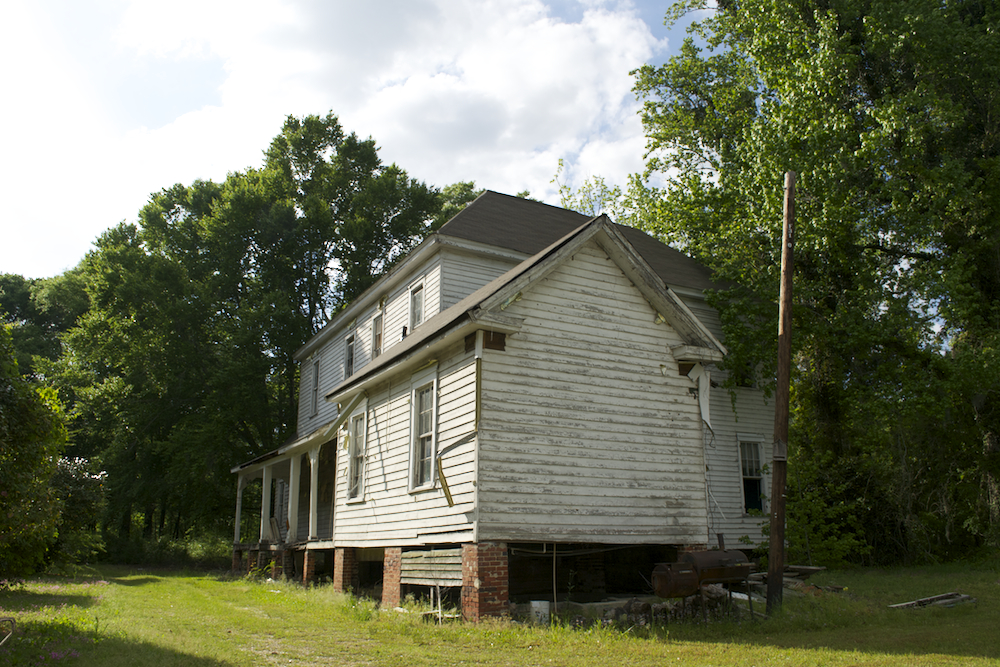 | |
| Side view of the Elmore house |
The home was definitely spacious and also consists of different areas of the house built with smaller doors and passage ways all throughout. The kitchen which you can see to your far right was built separate from the rest of the house as to be able to save the rest of the house in case the kitchen ever caught on fire. Underneath the kitchen lies a underground storage for different goods they may need to have stored during down seasons. Along the back the house is lined wit a large covered porch. Each room within the house contains a fireplace, including the rooms upstairs. It's apparent this home was belonging to of someone of much wealth at that time. The doorknobs are detailed with intricate patterns and imagery. Just studying the layout of the house is intriguing as you learn the different function and purposes each room may or may not have served especially since today many homes are built more based on the style rather than functionality.


One of the interesting things to notice especially if you are of an artistic soul, are the details and usage of a plant and vase on the doorknob. It makes you think about drawing or painting a still life and the symbolism that is associated.
From reclaiming wood to windows to sinks, the discoveries continue to be a surprise. All these reclaimed materials will be once again put to good use and made available at Evolutia.
Be sure to stay connected with Evolutia on the web so you can keep track of all new happenings with Evolutia as well as new contests and events!
Thank you to all those who have supported Evolutia!
Evolutia continues to work for you and providing you the best services, products and materials for your home and business needs!
Subscribe to:
Posts (Atom)